
- Boating Accident Resources
- Car Accident Resources
- Commercial Vehicle Accident Resources
- Construction Accident Resources
- Consumer Protection Resources
- Dog Bite Resources
- Firm News
- Motorcycle Accident Resources
- Personal Injury Resources
- Premises Liability Resources
- Product Liability/Mass Tort Resources
- Referral Resources
- Rideshare Accident Resources
- Slip and Fall Resources
- Truck Accident Resources
- Worker's Compensation Resources
- Wrongful Death Resources
- Common Questions About the BioZorb Lawsuit
- The Real Deal: Current Status
- What Is the BioZorb Marker?
- What Went Wrong?
- Why Was BioZorb Recalled?
- What Did the Lawsuits Allege?
- How Did the Litigation Progress?
- What Happened With the 2026 Settlement?
- Can You Still File a BioZorb Lawsuit?
- Real Advocacy with the Defective Medical Device Attorneys at Bernheim Kelley
- Why Choose Us?
Common Questions About the BioZorb Lawsuit
Hologic, a Massachusetts-based medical technology company, made BioZorb.
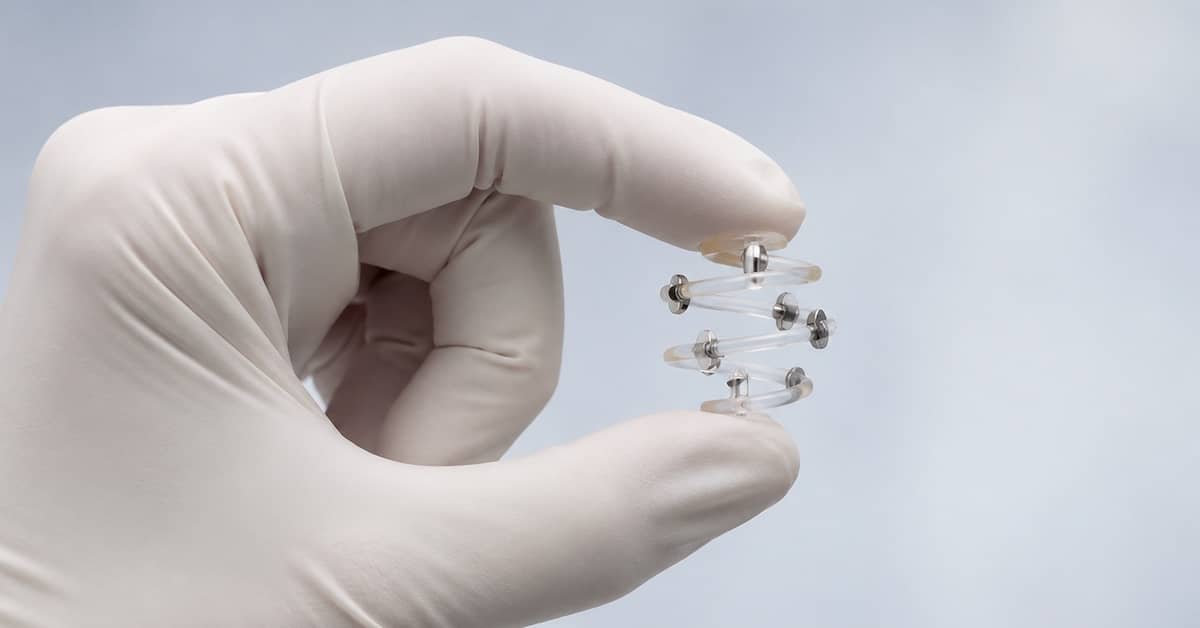
BioZorb was an implantable marker placed after a lumpectomy to mark the surgical site for future imaging and medical procedures. Its resorbable framework was designed to dissolve over time, while its titanium clips remained permanently.
The FDA issued a Class I recall in December 2024 after reports that the device could fail to absorb, move, or erode, creating a risk of serious injury.
Reported complications included:
- Failure to resorb
- Migration
- Erosion through the skin
- Infection
- Seroma
- Chronic pain
- Need for removal surgery
In one bellwether case, the court found that a jury should decide whether BioZorb contributed to the plaintiff’s injuries.
Yes. The parties finalized a settlement in January 2026 after reaching a preliminary agreement in November 2025. The deal was designed to resolve most of the existing BioZorb cases, but it depended on enough plaintiffs taking part and other conditions being met.
There is no public claims portal, because there was never a class action to join. The January 2026 settlement covered the roughly 200 women who had already filed and agreed to take part. It released their claims and nobody else’s.
New BioZorb cases are still being filed, and our firm is investigating and filing them. What decides whether yours can move forward is the filing deadline in your state, not the settlement. Those deadlines can be short, so if you are having symptoms, get your free case review as soon as possible.
BioZorb was a small implantable marker placed in the breast after a lumpectomy. Its plastic framework was designed to dissolve over a year or longer, while permanent titanium clips remained to mark the surgical site.
For many patients, it didn’t dissolve, and the complications that followed led to a Class I FDA recall and a wave of BioZorb lawsuits against the manufacturer, Hologic.
By early 2026, the parties reached a global settlement intended to resolve the substantial majority of the BioZorb litigation. Our blog explains what the device was, the reported injuries, the BioZorb recall, how the lawsuits against Hologic unfolded, and where things stand now.
If you were not included in the settlement, you should not assume it automatically ended your right to bring a separate claim. Your legal options depend on your case and the statute of limitations in your state.
If you have questions regarding a BioZorb lawsuit, contact Bernheim Kelley for a free case review.
The Real Deal: Current Status
The BioZorb litigation entered a formal settlement agreement in January 2026 after approximately 200 plaintiffs brought claims against Hologic. The settlement was intended to resolve the substantial majority of those cases, while the individual payment amounts remained confidential.
- Hologic recalled all unused BioZorb and BioZorb LP markers in October 2024.
- The FDA classified the action as a Class I recall, its most serious recall category.
- The BioZorb litigation reached a global settlement by January 2026.
- The settlement bound only the plaintiffs who signed it. No court set a deadline for anyone else, and new cases continue to be filed.
What Is the BioZorb Marker?
BioZorb, along with the smaller BioZorb LP version, is a three-dimensional implantable marker made by Hologic. Surgeons placed it in the breast during or after a lumpectomy in patients treated for breast cancer.
It held a set of permanent titanium marker clips inside a bioabsorbable structure. The marker had two jobs:
- Doctors could see it on medical images after surgery. (Although some doctors used it to help plan radiation treatment, the FDA said BioZorb was not specifically cleared or approved for that purpose.)
- Its plastic framework was designed to be absorbed by the body over one year or longer, while the titanium clips remained permanently.
That the marker would absorb was central to how the device was marketed and sold.
What Went Wrong?
The core failure was simple. In many patients, the device did not absorb the way it was supposed to.
Instead of dissolving, it stayed in place, hardened, shifted, or worked its way toward the surface. The complications patients reported included:
- Failure to resorb
- Migration away from the original site
- Erosion or protrusion through the skin
- Infection
- Seroma or fluid buildup
- Chronic pain
- Scarring or fibrosis
Some patients needed a second surgery to remove the device. For many of them, that meant another operation after they had already been through cancer treatment.
Why Was BioZorb Recalled?
BioZorb was recalled because it had the potential to cause severe injuries. Hologic recalled the markers in 2024.
In December 2024, the FDA classified the BioZorb action as a Class I recall, which is the most serious category the agency uses. A Class I designation means the FDA concluded that use of the device could cause serious injury.
According to the FDA, the recall involved all unused BioZorb Marker and BioZorb LP Marker devices, and providers were told not to implant them.
The recall gave plaintiffs additional support for claims that were already moving through the courts.
What Did the Lawsuits Allege?
Injured patients sued Hologic in federal court. The central claims were design defect and failure to warn. Plaintiffs argued the marker was defectively designed because it didn’t reliably absorb, and that Hologic failed to warn patients and surgeons about that risk.
Some complaints went further, alleging that the company promoted the device beyond its cleared use as a radiographic marker and marketed it as a way to fill the space left after a lumpectomy.
The cases were consolidated before Judge Allison Burroughs in the U.S. District Court for the District of Massachusetts.
How Did the Litigation Progress?
The cases moved quickly.
- Hologic succeeded on some arguments but failed to eliminate several key claims before trial.
- The court allowed key failure-to-warn, design-defect, and negligence claims to continue.
- In one bellwether case, the court found a triable dispute over whether an inadequate warning contributed to the plaintiff’s injuries.
- The court dismissed or limited certain other claims, depending on the plaintiff and applicable state law.
Bellwether trials are early test cases that give an idea of how juries are likely to respond to the case. The first of these was scheduled for September 2025 and then pushed to January 2026.
In December 2025, just weeks before that trial, the judge paused all litigation deadlines. That pause was a strong signal that the parties were deep in settlement talks.
What Happened With the 2026 Settlement?
The parties reached an agreement in principle in November 2025 and executed a formal settlement agreement on January 7, 2026. The agreement was intended to resolve the majority of the BioZorb cases.
The specific payout amounts and settlement terms were not made public. By that point, complaints had been filed on behalf of approximately 200 plaintiffs.
Earlier in the case, commentators had floated possible settlement-value ranges, but those were outside estimates, not the actual confidential terms of the deal.
Can You Still File a BioZorb Lawsuit?
Yes, in the right circumstances. We are investigating and filing these cases now.
A lot of what you’ll read online says otherwise, so it’s worth explaining why that’s wrong.
This was never a class action, and it was never an MDL. The Judicial Panel on Multidistrict Litigation never transferred these cases. Judge Burroughs consolidated the individual lawsuits under Federal Rule 42(a) so the parties could run discovery once instead of 200 times. That is a scheduling tool. It did not merge anyone’s claim into anyone else’s, and every plaintiff kept her own separate case.
The January 2026 agreement was a deal between Hologic and the women who had already sued and chose to take part. Their cases were dismissed in June 2026. Nobody outside that group was released. No court set a cutoff date for future claimants, and there is no claims portal, because there is nothing to register for.
The scale here matters too. Hologic sold BioZorb markers for more than a decade, and the number of women who received one is far larger than the 200 who filed. Most never knew there was litigation at all. Hologic’s own SEC filings show claims were pending in Massachusetts state court and in federal court in Kentucky, as well as in the consolidated Massachusetts docket, which is a fair indication that these claims were never confined to one courtroom.
What Actually Decides Your Case Is the Deadline
Every state limits how long you have, generally 1 to 4 years for a product liability claim. In most states, the clock starts when you knew or reasonably should have known that the device caused your injury, rather than on the day it was implanted.
That distinction carries real weight here. Plenty of women lived for years with a hard lump, ongoing pain, or a spot that kept appearing on imaging, and were told it was scar tissue or normal healing. They had no reason to connect any of it to a device until the FDA safety communication in October 2024 or the recall that December.
Whether that later start date applies to you is a fact question. It hinges on your medical records and your own timeline, and it’s not something we can answer here without reviewing your case.
What We Look For
The pattern worth reviewing looks like this:
- A lumpectomy or partial mastectomy for breast cancer
- A BioZorb or BioZorb LP marker placed at that surgery
- A complication serious enough to need medical attention
Most often that means a second surgery to remove or revise the device, a marker that never dissolved, migration, erosion through the skin, infection, seroma, chronic pain, or scarring and disfigurement.
If you have the device and no symptoms, the FDA doesn’t recommend removal and there is generally no claim to bring. If you did have complications, the deadline analysis is worth doing now. The review is free.
Speak with an experienced product liability attorney promptly about your options and any deadlines that apply.
Real Advocacy with the Defective Medical Device Attorneys at Bernheim Kelley
Bernheim Kelley handles defective medical device and product liability cases, and we work with referring attorneys on these cases across the U.S. If you have questions or believe you have a defective medical device claim, reach out to our team right away. We’ll take a look and Keep It Real with you about your options.
Last Updated: August 2026
Why Choose Us?
When you’re facing one of the toughest moments of your life, you need more than just a lawyer—you need a trusted ally who will stand with you and fight for your rights.