
- Boating Accident Resources
- Car Accident Resources
- Commercial Vehicle Accident Resources
- Construction Accident Resources
- Consumer Protection Resources
- Dog Bite Resources
- Firm News
- Motorcycle Accident Resources
- Personal Injury Resources
- Premises Liability Resources
- Product Liability/Mass Tort Resources
- Referral Resources
- Rideshare Accident Resources
- Slip and Fall Resources
- Truck Accident Resources
- Worker's Compensation Resources
- Wrongful Death Resources
FAQs About How To Dispute a Credit Report Error
File a dispute directly with the credit bureau reporting the error (Experian, Equifax, or TransUnion) online, by mail, or by phone. Include the following:
- Name
- Address
- Specific account in question
- Clear description of the error
- Copies of any supporting documents
The law states that the reporting bureau has to investigate within 30 days. The bureau will have to notify the furnisher, the company that reported this information to them, within 5 business days so they can investigate, too. You can dispute directly with the furnisher as well, though it’s generally recommended to go straight to the credit bureau.
Credit bureaus generally have 30 days to complete a reinvestigation (15 U.S.C. § 1681i). In some circumstances, such as when the consumer submits additional information during the investigation window, the deadline may extend to 45 days. Failure to investigate within that timeframe is itself a potential Fair Credit Reporting Act (FCRA) violation.
Yes. Disputing a credit report error directly with the bureau is free. You don’t have to pay a credit repair company or anyone else to file a dispute. The FCRA gives every consumer the right to dispute inaccurate information at no cost.
A “verified as accurate” response is not necessarily the final word on the matter. If the bureau failed to conduct a “reasonable reinvestigation,” or if the furnisher verified inaccurate information without actually investigating, they could be violating the FCRA.
You may be able to sue for statutory damages from $100 to $1,000, actual damages, and attorney’s feesand costs. A credit report dispute lawyer can evaluate your situation at no cost.
No.Filing a dispute does not affect your credit score. The item under dispute may be noted as “in dispute” on your report while the investigation is pending, but the dispute process itself doesn’t lower your score.
You can do both, but disputing with the credit bureau is usually the stronger option. When you dispute with Experian, Equifax, or TransUnion, the bureau generally has to investigate and notify the furnisher. This can trigger the furnisher’s duty to investigate, report, and correct information as well.
You can dispute directly with the furnisher if the error involves that account, such as the balance, payment history, account status, or whether the account belongs to you. But don’t treat a furnisher dispute as a replacement for a bureau dispute. If the bureau says the information is “verified as accurate” and the error is still there, that may be the point to talk to a Florida credit report error attorney about your options.
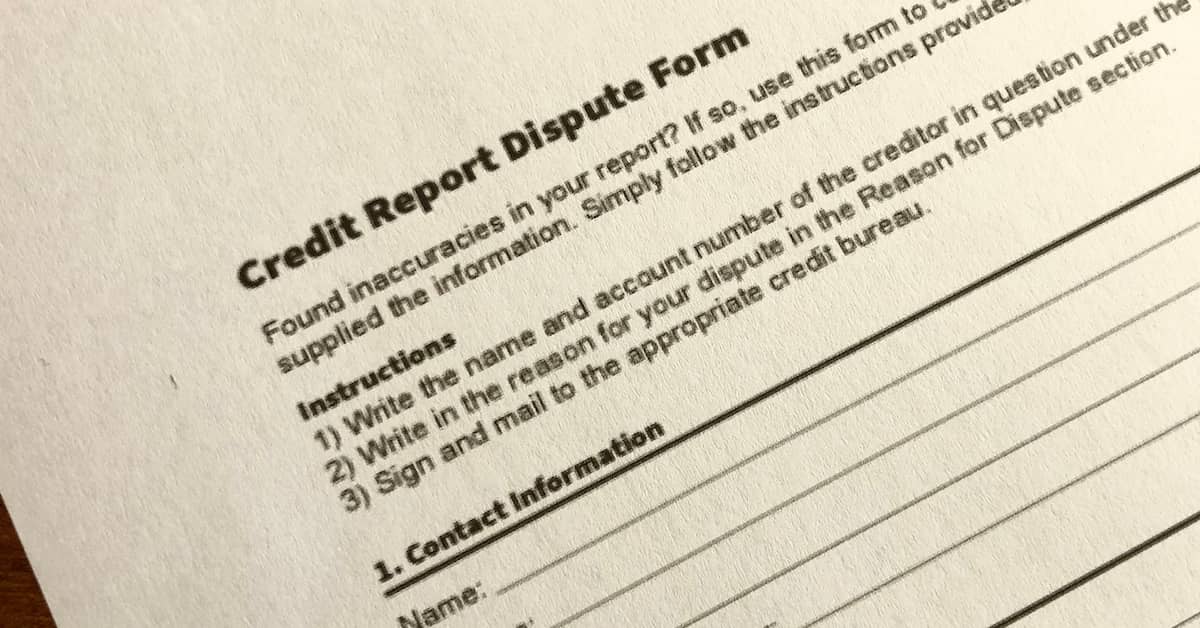
Spotting something wrong on your credit report is unsettling. It might be an account you don’t recognize, a balance that’s already been paid, or a late payment that never happened. Whatever it is, you have the right to dispute it. And the credit bureau has a legal obligation under federal law to actually investigate.
Here we’ll cover how to dispute an error on your credit report and what to do if it doesn’t go the way it should, because you may be able to file an FCRA claim if they’re in the wrong.
The Real Deal
You can dispute a credit report error directly with the bureau reporting it (Experian, Equifax, or TransUnion). The Fair Credit Reporting Act (FCRA) requires the bureau to investigate within 30 days of getting your dispute (15 U.S.C. § 1681i).
You can also dispute directly with the company that reported the information to the credit bureau, known as the furnisher (e.g., a credit card company, lender, debt collector, etc.). Furnishers have their own legal duties under the FCRA (15 U.S.C. § 1681s-2). But disputing with the credit bureau first is typically the better move. They’re required to notify the furnisher within 5 business days anyway.
If the disputed information is found to be inaccurate, incomplete, or unverifiable, it has to be corrected, deleted, or blocked from being reported again. Should the bureau respond with “verified as accurate” without correcting a real error, that’s not necessarily the end. That response could be the beginning of a legal claim, and a Florida FCRA attorney can explain your options to you.
Quick Facts About Credit Report Disputes
- You can dispute credit report errors for free
- The three major credit bureaus are Experian, Equifax & TransUnion
- Credit bureaus generally have 30 days to investigate
- Some investigations may take up to 45 days
- A “verified as accurate” response may not be the end
- If the investigation was unreasonable, you may have an FCRA claim
How To Dispute a Credit Report Error
Step 1: Get Your Credit Reports
Pull reports from Experian, Equifax, and TransUnion separately, because the same error doesn’t always appear on all three. You’re entitled to free credit reports from all three major bureaus through AnnualCreditReport.com, the official site authorized by federal law.
Review each one carefully for the following:
- Accounts you don’t recognize
- Balances that don’t match what you know you owe
- Late payments that didn’t happen
- Debts that have been paid or discharged
- Accounts that belong to someone else entirely
Step 2: Document the Error Specifically
Before filing a dispute, be specific about what’s wrong. What you need is a simple, clear, factual statement. For example:
- “This account is not mine.”
- “This balance was paid on this date & here is the documentation.”
- “This payment was on time & here is the bank record.”
Gather supporting documentation like bank statements, receipts, court documents if a debt was discharged in bankruptcy, or correspondence with the creditor.
Step 3: File Your Dispute
You can file your dispute online, by phone, or by mail.
- Online is the fastest, but there’s not much documentation, so save PDFs and print everything out.
- Certified mail creates a paper trail, which is useful if the error isn’t fixed and you later need to show what you submitted and when.
- Disputing by phone is also an option, but make sure to follow up in writing.
When you file, include the following:
- Full name
- Address
- Specific account in question
- Clear description of the error
- Copies (never originals) of supporting documents
Step 4: Understand What Happens Next
After you file, the bureau is required to complete a reinvestigation within 30 days or up to 45 days if you provide additional info in that initial window. The bureau has to forward your dispute to the furnisher, and it has its own investigation obligations.
After the investigation is done, the bureau will send you the results in writing.
Step 5: What To Do if They Don’t Fix It
A “verified as accurate” response doesn’t necessarily mean the investigation was thorough or that your dispute is over. Under the FCRA, the bureau is required to conduct a “reasonable reinvestigation.” That means they are required, by law, to take your dispute seriously, not just forward it to the furnisher and accept their word at face value.
If the reinvestigation wasn’t reasonable, or if the furnisher verified information they knew or should have known was wrong, that may be a violation of the law.
Two additional steps are worth taking at this point:
- Dispute directly with the furnisher. Filing directly with the bank, collector, or creditor creates a separate legal obligation on their end.
- Talk to a Florida FCRA attorney. A “verified as accurate” response after a legitimate dispute is often where FCRA cases begin. A credit report dispute lawyer can assess what happened and talk to you about your options at no cost to you.
What You Can Recover Under the FCRA
If a credit bureau or furnisher violated the FCRA, you may be able to get compensation. But the damages you can seek depend on whether the violation was willful or negligent (15 U.S.C. § 1681n and § 1681o):
- Statutory damages are set by law and can range between $100 and $1,000 for willful violations.
- Actual damages for real financial harm, like a denied loan, a higher interest rate, or a rejected rental application.
- Attorney’s fees and costs, which the bureau or furnisher pays, not you.
An Error on Your Credit Report Is a Problem Worth Fixing
You’ve got to know how to dispute an error on your credit report because a mistake can affect your ability to get a mortgage, rent an apartment, finance a car, or get a job. The dispute process exists to fix these types of issues. And if the process doesn’t work, the law gives you real options.
The FCRA attorneys at Bernheim Kelley help Florida consumers hold credit bureaus, creditors, collectors, and other furnishers accountable when they ignore legitimate disputes or fail to fix damaging credit report errors. We handle FCRA and other consumer protection cases at zero cost to you. You pay nothing.
Take Real Action today and schedule a FREE case review. Let’s figure out what your options are and what to do next. Call 954-329-0440 or reach out to us online.

– you are in good hands!